

Preach Like a Model
More pastors should preach like a supermodel.
I know that sounds like a provocative statement, but let me explain.
I do not mean that pastors should try to look stylish on stage. Nor do I intend to encourage pastors to master clever communication techniques or include ornate props in their preaching.
Unfortunately, we have too many preachers who focus on wearing expensive clothes, speaking eloquently, and allocating substantial portions of the budget to sermon props.
We can debate the place or value of these issues in the life of a pastor at a different time.
I have something completely different in mind when I suggest that more pastors should preach like a model.
Whether they recognize it or not, pastors model how to read the Bible when they preach. So, they should model healthy ways of interacting with God’s word.
This claim raises several questions worth reflection.
Why is preaching so important for people sitting in the pews?
We study Scripture to learn who God is and how we are meant to live for his glory.
Unfortunately, you don’t need to dig too deep into research on biblical literacy to discover that most people sitting in the congregation do not interact with Scripture regularly. Even fewer people study the Bible seriously.
While the American Bible Society finds that roughly 50% of the USA uses the Bible, this includes people who only interact with Scripture 3-4 times per year. People they describe as “Scripture-Engaged” only account for 18% of our society.
The Barna Group’s research in 2025 offers a slightly more encouraging (but really alarming) statistic: “Among self-identified Christians, the rate reaches 50 percent—the highest level in over a decade” (https://www.barna.com/trends/bible-reading-trends/).
If we take the Barna Group’s data, 1 out of 2 people listening to the pastor do not study the Bibleor read it consistently. Their primary means of engaging with Scripture comes through the weekly sermon(s).
This research underscores the important role preaching plays in forming how believers engage with God’s word. Too many people are completely disengaged from Scripture. And those who do read the Bible regularly are often ill-equipped to study it for themselves.
How do pastors model biblical interpretation through preaching?
If, as I have argued in the previous section, fifty percent of our congregations only interact with Scripture through the weekly sermons, it’s critical to reflect on the ways pastors model biblical interpretation through the act of preaching.
Here are five ways pastors model biblical interpretation, whether they recognize it or not. We could certainly add more.
(1) Selecting the passage
Pastors implicitly teach their congregations how to interact with Scripture through the passages they select for their sermons. Intentionally selecting passages from all over the canon communicates the value of every part of God’s word.
In contrast, if a church appears to neglect whole portions of Scripture (e.g., the Old Testament, prophetic literature, Revelation, etc.), the pastor can implicitly emphasize one portion of the canon over others.
(2) Staying focused on the text
It’s easy to spend so much time on illustrations or stories intended to help people understand the passage, we can unintentionally indicate that Scripture is a muse for personal reflection.
By keeping your focus and the congregation’s focus on the text, pastors implicitly remind the congregation that God’s revelation deserves our attention. Instead of remembering our cleverly worded big idea or powerful illustration, pastors should help their congregants remember the meaning of the text. We do this by keeping our focus there.
(3) Engaging with whole books
When a sermon or sermon series engages with a whole book of the Bible, the pastor teaches his or her congregation to engage with the literary context of Scripture.
If sermons focus on isolated verses or passages to the neglect of the canonical context, the pastor may inadvertently teach the congregation to search the Bible for proof-texts.
(4) Conveying sources and research
As a/the primary Bible teacher, many pastors feel the need to project expertise on Scripture. Thistemptation is understandable but dangerous.
Pastors should be very knowledgeable about God’s word. Ideally, the nature of the pastoral vocation should mean that pastors know more about Scripture than most people in the congregation. Yet, it is dangerous to set oneself up as the authoritative interpreter of Scripture forthe congregation.
We can avoid this misperception by acknowledging the sources we used to study Scripture and the time we spent with the text each week. These small admissions in the sermon remind the congregation that you are not making things up on your own but are tapping into the wisdom afforded by godly men and women across the world and throughout history. Acknowledging the time you spend in preparation also relieves the congregation from the burden of trying to imitate your depth of knowledge in their 10-15 minute devotional time.
(5) Acknowledging difficult passages
Pastors face the temptation to provide the answers to every question. As the person God has called to lead the congregation, it’s easy to feel obligated to provide all the answers. While Paul instructed pastors to study to show themselves approved (2 Timothy 2:15), there’s no indication that a pastor should pretend to know every answer.
If we take seriously the long-held belief that God is infinite and we are finite, we should approach His word with humility. We can do this by highlighting different ways faithful Christians have interpreted a passage of Scripture. Instead of compromising our authority, approaching Scripture with humility models a healthy approach for believers to imitate.
What are the pros and cons of modeling biblical interpretation through preaching?
It would be wonderful if more churches devoted time and resources to classes about studying the Bible. Our churches would be strengthened by cultivating a community of deep engagement with Scripture.
Even if a church can devote intentional time or space to teaching biblical interpretation, it’s important to reflect on the pros and cons of modeling biblical interpretation through preaching.
We’ll start with the bad before we get to the good.
Con #1: Preaching presents an unrealistic ideal.
Ideally, pastors present the fruit of hours worth of study from the week when they preach their sermon.
When a person does not study the Bible consistently on their own, they can mistakenly imagine that they should get similar insights from the Bible in their 10-15 minutes as the ones you highlight in your sermon.
This unrealistic example can leave people frustrated when they try to understand Ecclesiastes, Song of Songs, or any other difficult portion of Scripture. Many passages are like buried treasure, which require significant investment to uncover.
Interpreting the Bible well takes time, and the sermon is not designed to model this reality. You can overcome this problem by referencing the time you spent studying and the resources you used.
Con #2: Preaching emphasizes application.
This point may not seem like a negative issue at first, but it’s important.
Shouldn’t all of our interaction with Scripture lead us to implement its truth in our daily lives?
Yes, but pastors typically arrive at an application for a sermon based on significant study and prayer over Scripture. If congregants skip these steps, they can move too quickly from study to application, which can cause some problems when you read a verse like Leviticus 19:27
You shall not round off the hair on your temples or mar the edges of your beard.
Knowing how to apply Scripture is a notoriously difficult task. We should model careful ways of doing this in our sermons. Explaining how a particular application might arise from a passage of Scripture is a critical component of preaching that we often overlook. Yet, the more deeply our calls to action are rooted in Scripture, the more persuasive they will be.
Pro #1: Biblical interpretation is often best taught through case studies.
I’ve spent years studying the Bible academically. On numerous occasions, I took courses focused on Bible study techniques. While these classes provide some benefit, I learned best when a professor opened a passage of Scripture and showed what he or she saw in the text and why they interpreted it in certain ways.
When we preach, we get to guide our congregations through a passage of Scripture. If we do this well, they will “catch” a lot more about healthy biblical interpretation than we could ever teach them.
Pro #2: Preaching is done in community.
With the explosion of “Bible Content” on the internet over the last twenty years, much biblical training happens outside the context of the local church. While this development can be positive if a person is engaging with reputable sources, it can be disastrous if someone interacts with heretical or divisive teachings.
Since preaching is done in the context of a local church, there is an opportunity for questions and answers after the service. A pastor can make him/herself available for ongoing discussion about the passage.
Some practical steps
I hope I’ve convinced you that you model biblical interpretation, whether you recognize it or not.If I have convinced you of that, I hope you will take this truth as an invitation and a high calling.
Rather than summarize my previous points, I want to leave you with three practical ways to model biblical interpretation in your preaching.
(1) Ask questions during your sermon.
A major component of studying the Bible well involves asking good questions. Don’t just tell your congregation about the text. Ask rhetorical questions. Then explain your thinking.
“Why would Paul write that?”
“What was going on in the world at this time?”
“What does this phrase mean?”
Asking rhetorical questions equips the congregation with questions they can ask when they studythe Bible for themselves.
(2) Preach from the whole canon.
Obviously, you cannot accomplish this task every year, but it’s critical for your congregation to see you engage with every part of Scripture. Don’t get locked into the New Testament or the OldTestament. Make sure you engage with Jeremiah and Paul.
Every now and then, when you’re feeling brave, throw in some sermons on the Song of Songs to keep people on their toes.
(3) Focus on ways the bible interprets itself.
Finally, let people see how the biblical authors engage with other portions of Scripture. This approach invites the congregation to see how the Bible is interconnected.
This method proves especially useful for helping people understand how to read the Old Testament in the light of Jesus’s life, death, and resurrection.
There are many more practical ways you can model healthy biblical interpretation from the pulpit, but if you take these practical steps, you’ll be well on your way to preaching like a model in the best sense of the phrase.
NEW TO JOURNEY: THE BIBLE CHALLENGE:

Journey Pastoral Coaching is privileged to partner with Bible Study Challenge, a unique approach to Bible study designed to help you enjoy your time in the Word, and more deeply understand what you study.
Not only will Bible Study Challenge help make your study of the Scriptures come alive, but your study helps support the ministry of Journey.
April’s challenge is on the Book of Jonah. Every month brings a new book and challenge. Click here to learn more.
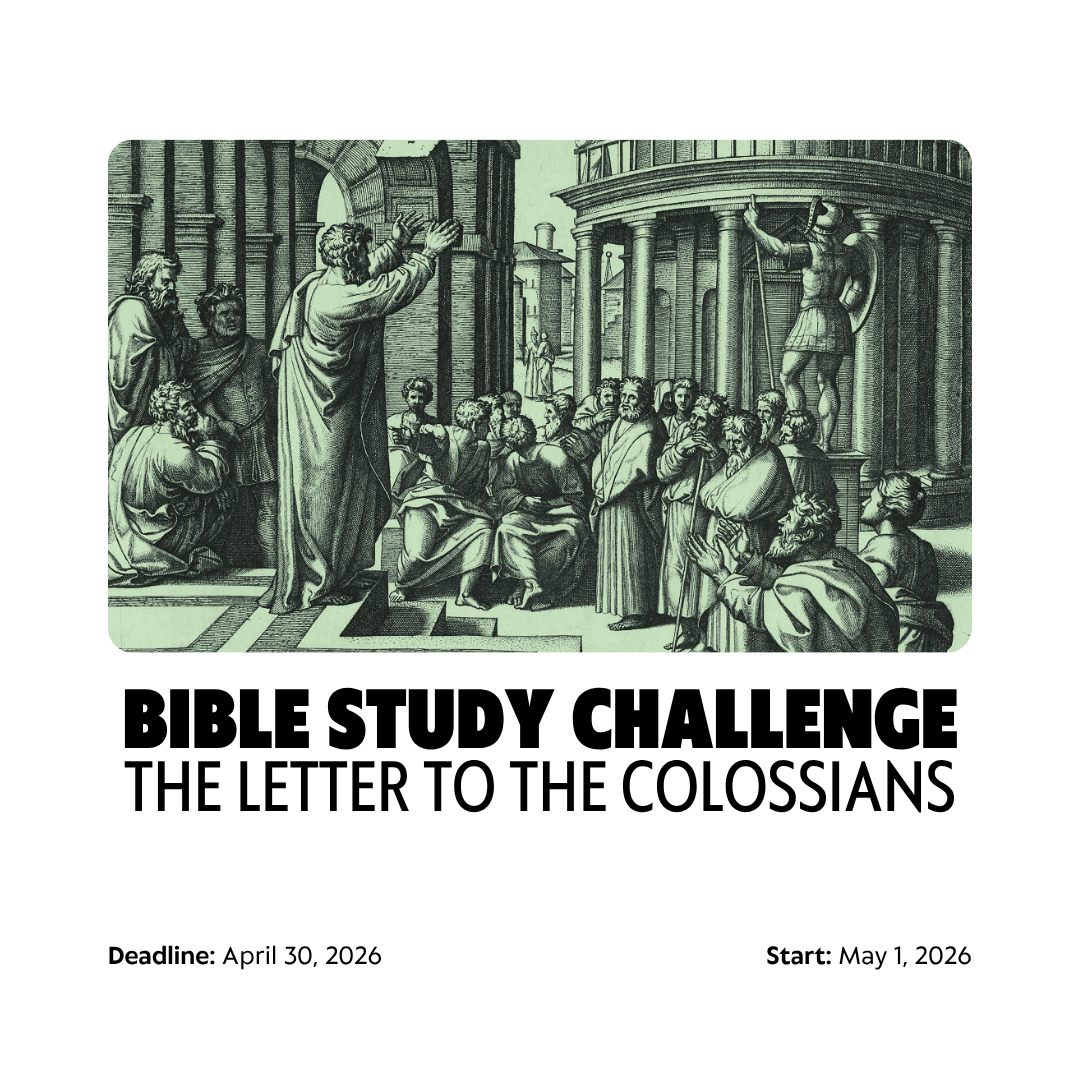
The May Challenge will focus on the book of Colossians.
Check back here on this article or our April 15 article to sign up for the May Bible Challenge. The deadline is April 30, 2026.
Remember to use the unique Journey link. Doing so will help support the ministry of Journey Pastoral Coaching.
Bio: Tyler Fulcher is an Editor at Gospel Publishing House in Springfield, MO. He earned his Ph.D. in the Old Testament from Baylor University and writes a weekly newsletter about the Bible, Theology, and Church History at mybibleschool.com (http://mybibleschool.com/). He is married to Julie Fulcher and has three young daughters.
———-
NOTE: Journey Pastoral Coaching exists to provide pastoral coaching to Millennial ministers.
Saddled with large student debt, just beginning to set up homes and start families, and serving in low paying first and second positions, Millennials are those who most desire but can least afford to pay for pastoral coaching.
We are able to do so thanks to the faithful and generous support of individuals and churches like yours who want to see young leaders not only enter the ministry, but remain in the ministry.

Now, more than ever, we need your help.
If you or your church would like to help Millennial ministers across the US and overseas build strong for a lifetime in ministry, please click here to support Journey monthly or with your one-time gift. Thank you.
We also invite you to click and subscribe to our twice-monthly blogs at journeypastoralcoaching.com
